


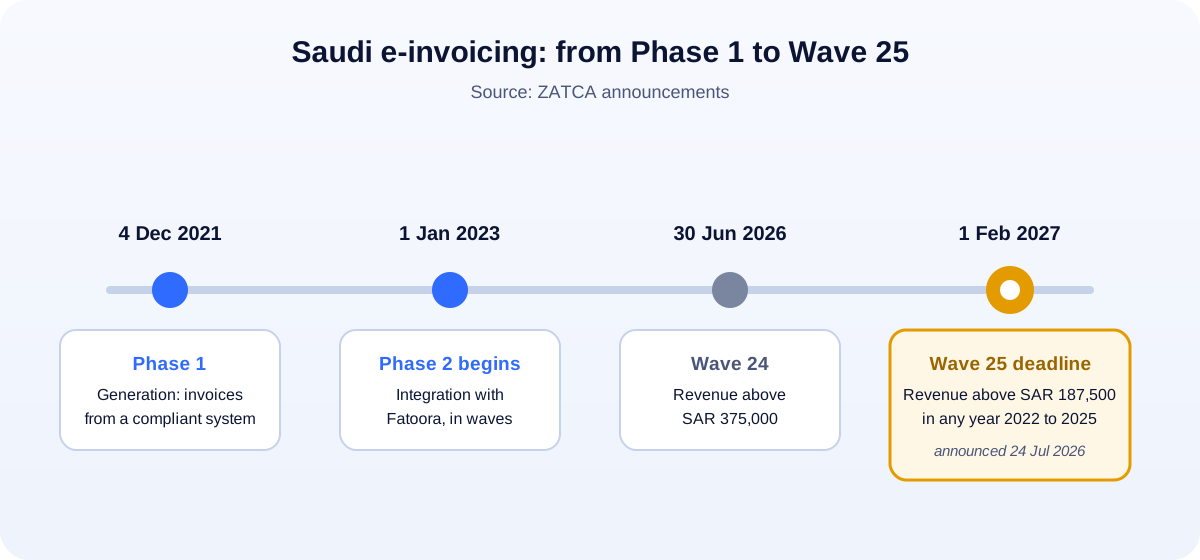
Short answer: on 24 July 2026, Saudi Arabia’s Zakat, Tax and Customs Authority (ZATCA) announced Wave 25 of e-invoicing Phase 2. It covers taxpayers whose VAT-subject revenue exceeded SAR 187,500 in any one of the years 2022, 2023, 2024 or 2025. Those businesses must connect their invoicing system to ZATCA’s Fatoora platform by 1 February 2027. (ZATCA)
That threshold is half the Wave 24 level of SAR 375,000. Many small Saudi businesses that thought e-invoicing was “for big companies” are now in scope: cafés, salons, boutiques, contractors and service providers. Here is what it means and how to get ready without a last-minute rush.
Phase 1 vs Phase 2 in one minute
ZATCA rolled e-invoicing out in two phases (ZATCA):
- Phase 1, “Generation” (from 4 December 2021): every VAT taxpayer must issue invoices from a compliant electronic system. Handwritten invoices and editable Word or Excel templates are not allowed.
- Phase 2, “Integration” (from 1 January 2023, in waves): your system must also connect to ZATCA and exchange each invoice with the Fatoora platform in the required format.
Phase 2 is the one that needs real software work, and it arrives in waves based on revenue. Wave 24 had to integrate by 30 June 2026. Wave 25 has until 1 February 2027.
Am I in Wave 25? A 30-second check
Look at your revenue subject to VAT for each year from 2022 to 2025:
- If any one year was above SAR 187,500, and you were not already in an earlier wave, you are very likely in Wave 25.
- It does not matter if this year’s revenue is lower. One year above the line is enough.
- ZATCA notifies targeted taxpayers directly, so check the email and the ZATCA portal account linked to your VAT registration.
If you are not sure, ask your accountant to confirm from your VAT returns. Don’t wait for the notice to arrive before you start: integration usually involves software changes, testing and staff training.
Clearance and reporting: the two models you need to know
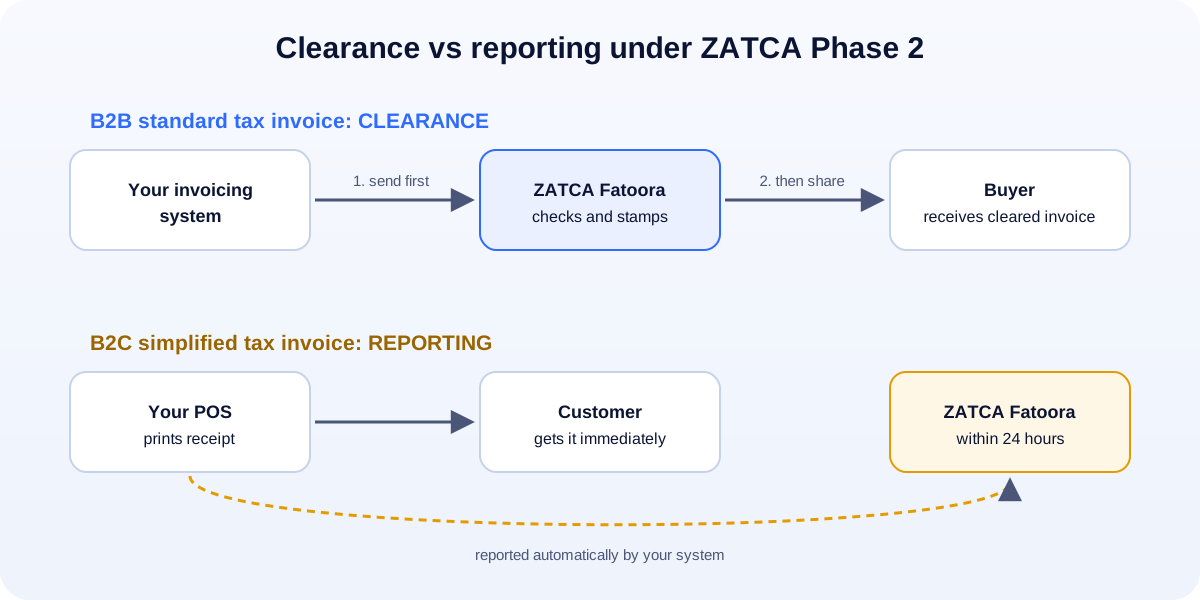
Phase 2 treats your two invoice types differently (ZATCA FAQ):
| Standard tax invoice | Simplified tax invoice | |
|---|---|---|
| Used for | Business to business (B2B) | Business to consumer (B2C), e.g. a shop receipt |
| Model | Clearance | Reporting |
| When ZATCA gets it | Before you share it with the buyer | Within 24 hours of issuing it |
| What ZATCA does | Checks it and adds its cryptographic stamp | Validates it and sends back an acknowledgement |
In practice this means:
- B2B invoices can’t be sent until ZATCA clears them. If your connection is down, your invoice isn’t valid yet. Your system needs a way to queue and retry.
- B2C receipts print straight away, but your POS must upload each one within 24 hours. A POS that runs offline for days is a compliance risk.
What a Phase 2-ready system must do
You don’t need to understand the technical standards, but your software provider must. Ask them to confirm, in writing, that the system:
- Creates invoices in the structured XML format ZATCA specifies. ZATCA is clear that a scanned or photocopied invoice is not an e-invoice.
- Is onboarded to Fatoora with its own cryptographic identity (ZATCA issues these during onboarding) for each device or branch that issues invoices.
- Adds the required QR code, cryptographic stamp and unique invoice ID to every invoice.
- Sends B2B invoices for clearance and reports B2C invoices within 24 hours, through ZATCA’s APIs.
- Handles credit and debit notes the same way as invoices (they are also cleared or reported).
- Keeps a record of each response from ZATCA, so you can show what was accepted.
ZATCA publishes a list of solution providers that have registered with it, plus technical guides for developers, on its e-invoicing pages.
A 4-month plan to be ready before 1 February 2027
October: confirm and choose. Confirm with your accountant that you are in Wave 25. List every place you issue invoices (POS terminals, branches, online store, accounting system). Decide whether to upgrade your current software or move to one that is already Phase 2-ready.
November: connect and test. Register your devices on Fatoora and test in ZATCA’s sandbox and simulation environments before going live. Test the awkward cases: returns, credit notes, discounts, foreign customers and offline periods.
December: clean your data. Clearance fails on bad data. Check customer VAT numbers, addresses and product tax codes in your system. A B2B invoice with a wrong buyer VAT number will be rejected.
January: go live early. Switch on in early January, not on 31 January. Train the team on what to do when ZATCA rejects an invoice. Keep an eye on the error log for the first few weeks.
Common mistakes we see
- “Our accountant handles VAT, so we’re covered.” Phase 2 is about the invoicing system, not the VAT return. Your accountant can confirm the wave; your software does the integration.
- One certificate for all branches. Each invoicing device or unit needs to be onboarded properly. Check how your provider handles multiple POS terminals.
- Testing only happy paths. Most rejections come from returns, missing buyer details and rounding differences.
- Custom-built systems with no plan. If your invoices come from a custom website or app, the developer needs time to build and test the ZATCA connection.
If you also trade in the UAE
The UAE is building its own e-invoicing system on a different design (a “5-corner” model through accredited service providers), with large businesses first. The two systems are not interchangeable. Read our UAE e-invoicing guide to plan both at the same time.
How UMA can help
We build and connect business systems: POS, online stores, custom invoicing tools and dashboards. If your invoices come from a website or app we built (or one you need replaced), we can plan the Fatoora connection, test it in ZATCA’s sandbox and train your team. See our app development and data and reporting services, or send us a message with how you issue invoices today.
This guide is general information, not tax or legal advice. Always confirm your wave and obligations with ZATCA or a qualified Saudi tax adviser.