


Short answer: the U.S. Small Business Administration’s rule of thumb is to spend 7 to 8 percent of your revenue on marketing if you bring in under $5 million a year and keep about 10 to 12 percent as profit. (SBA) At $500,000 in revenue, that’s about $2,900 to $3,300 a month. Spend more when you’re launching or growing fast. Spend less, and more carefully, when margins are thin. Then check the number against what a new customer is actually worth to you.
Most small business owners don’t have a marketing budget. They have a list of things they pay for: the website host, some Facebook boosts, a directory listing a salesperson talked them into. That’s how money gets wasted. Here’s how to set a real number and split it sensibly.
The benchmark: what the 7–8% rule looks like in dollars
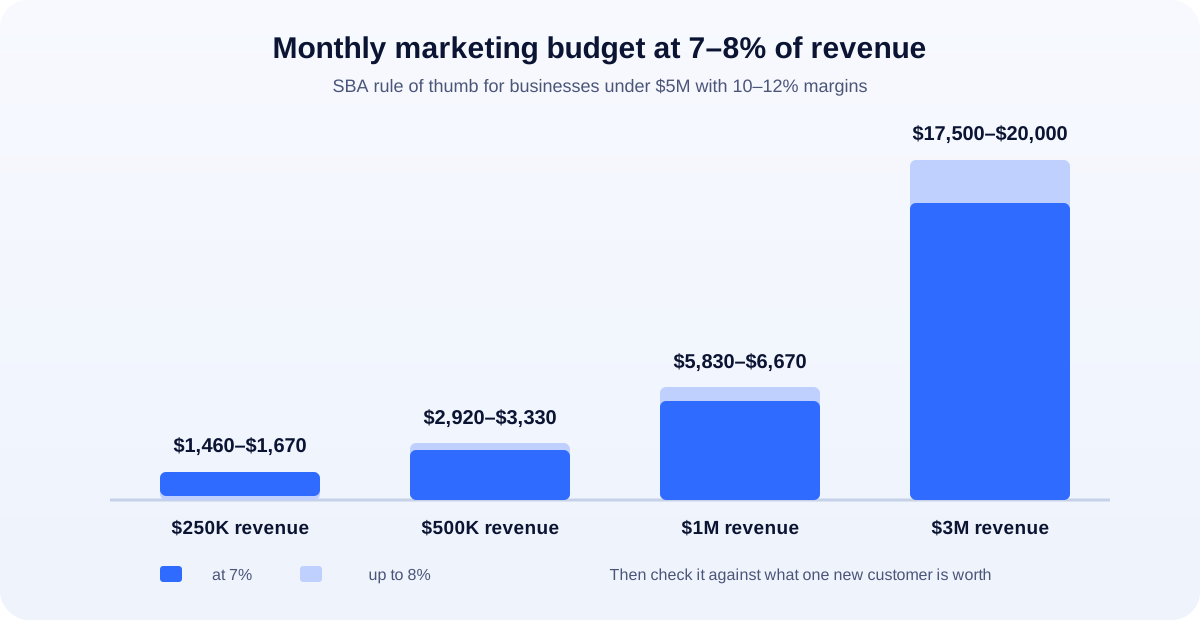
The SBA describes a budget split between two things: brand development (your website, blog, sales materials) and promotion (campaigns, advertising, events). Both count. Here’s the rule converted to real numbers:
| Annual revenue | Yearly budget at 7–8% | Per month |
|---|---|---|
| $250,000 | $17,500 – $20,000 | about $1,460 – $1,670 |
| $500,000 | $35,000 – $40,000 | about $2,920 – $3,330 |
| $1,000,000 | $70,000 – $80,000 | about $5,830 – $6,670 |
| $3,000,000 | $210,000 – $240,000 | about $17,500 – $20,000 |
For comparison, Gartner’s 2026 survey of marketing leaders found that marketing budgets average 7.8% of company revenue. (Gartner) Most of those respondents work at companies with over $1 billion in revenue, so it’s a different world. But it’s a useful reminder that large companies land in the same range.
When to spend more than 7–8%
- You’re new. Nobody knows you yet. You have no reviews, no rankings and no referrals. A launch period of heavier spending is normal; set an end date and review it.
- Each customer is worth a lot over time. A dental practice, an accountant or an HVAC company with maintenance plans earns from one customer for years. You can afford to pay more to win them.
- You’re in a crowded local market. If ten roofers in your city are all running ads, being visible simply costs more.
- You have healthy margins. If you keep 15% or more as profit and have room to grow, investing more in marketing usually makes sense.
When to spend less (and smarter)
- Margins are under 10%. Fix pricing or costs first. Marketing can’t fix a business that loses money on every sale.
- You’re already at capacity. If you can’t take more work, spend on raising prices and improving the customers you attract, not on more leads.
- Most of your work comes from referrals. Protect that first: reviews, follow-ups, a simple referral thank-you. It’s the cheapest marketing there is.
A better way to check the number: work back from a customer
Percent-of-revenue is a sanity check. The real question is: how much can you afford to pay to win one customer?
Here’s a simple way to work it out, using an example with made-up round numbers:
- Average profit from a new customer in their first year. Say a home services company makes $600 profit per new customer.
- How many leads become customers. Say 1 in 3 leads books a job.
- The most you can pay per lead and break even = $600 ÷ 3 = $200 per lead.
- Pick a safer target, for example half of that: $100 per lead.
- Monthly budget = the number of new customers you want × leads needed per customer × target cost per lead. For 10 new customers: 10 × 3 × $100 = $3,000 a month.
Now compare that with the 7–8% figure. If they’re close, you’re in a sensible range. If the customer-based number is much higher, either your goal is ambitious or your conversion rate needs work. Often the cheapest fix is answering the phone faster.
How to split the budget
There’s no single right split, but this is a reasonable starting point for a local service business. Adjust it once you see results:
- Foundation (about 20–30%): website hosting and improvements, Google Business Profile, SEO, tracking and tools. This is the part that keeps working when you pause ads.
- Paid advertising (about 40–50%): Google Search ads or Local Services Ads for people already searching, and Meta ads for awareness or offers. Our guide to Google Ads vs Meta Ads explains which to start with.
- Content and social (about 10–20%): photos, short videos, posts, a useful blog article each month.
- Retention (about 5–10%): email or text follow-ups, review requests, referral thank-yous.
- Testing (about 5–10%): a small slice for trying one new idea each quarter.
If you run a home services business, also look at Google’s pay-per-lead option: our guide to Google Local Services Ads in 2026 covers how it works now.
Track it, or you’re guessing
You don’t need expensive software to measure marketing. You need three habits:
- Track the actions that matter on your website. Calls, form submissions, booking clicks and WhatsApp or chat starts can all be set up as key events in Google Analytics 4.
- Ask every new customer how they found you, and write it down in your booking system or a simple spreadsheet.
- Review it monthly. For each channel: what did it cost, how many leads, how many customers, and what did each customer cost? Move money from the worst performer to the best one.
Common budget mistakes
- Spreading too thin. $100 on each of eight platforms teaches you nothing. Start with one or two channels and do them properly.
- Paying for “exposure.” Directory listings, sponsorships and ad packages that can’t show you leads or customers.
- Stopping everything in a slow month. SEO and reviews build slowly; cutting them to zero resets your progress.
- Ignoring the follow-up. Paying for leads that nobody calls back within the hour.
- Counting only ad spend. Your time, agency fees and tools are part of the real cost.
How UMA can help
We help small businesses set a marketing budget they can defend, put tracking in place, and run the channels that fit: SEO, Google and Meta ads, and reporting that shows cost per lead and per customer. We work remotely with U.S. small businesses and others worldwide. See our paid ads and data and reporting services, or tell us your revenue and goals and we’ll suggest a starting budget.
The figures above are general benchmarks, not financial advice. Your margins, market and goals should drive your final number.